11/02/2026 • by Jonas Kellermeyer
Innovation Trends 2027: Seven Potentially Defining Developments
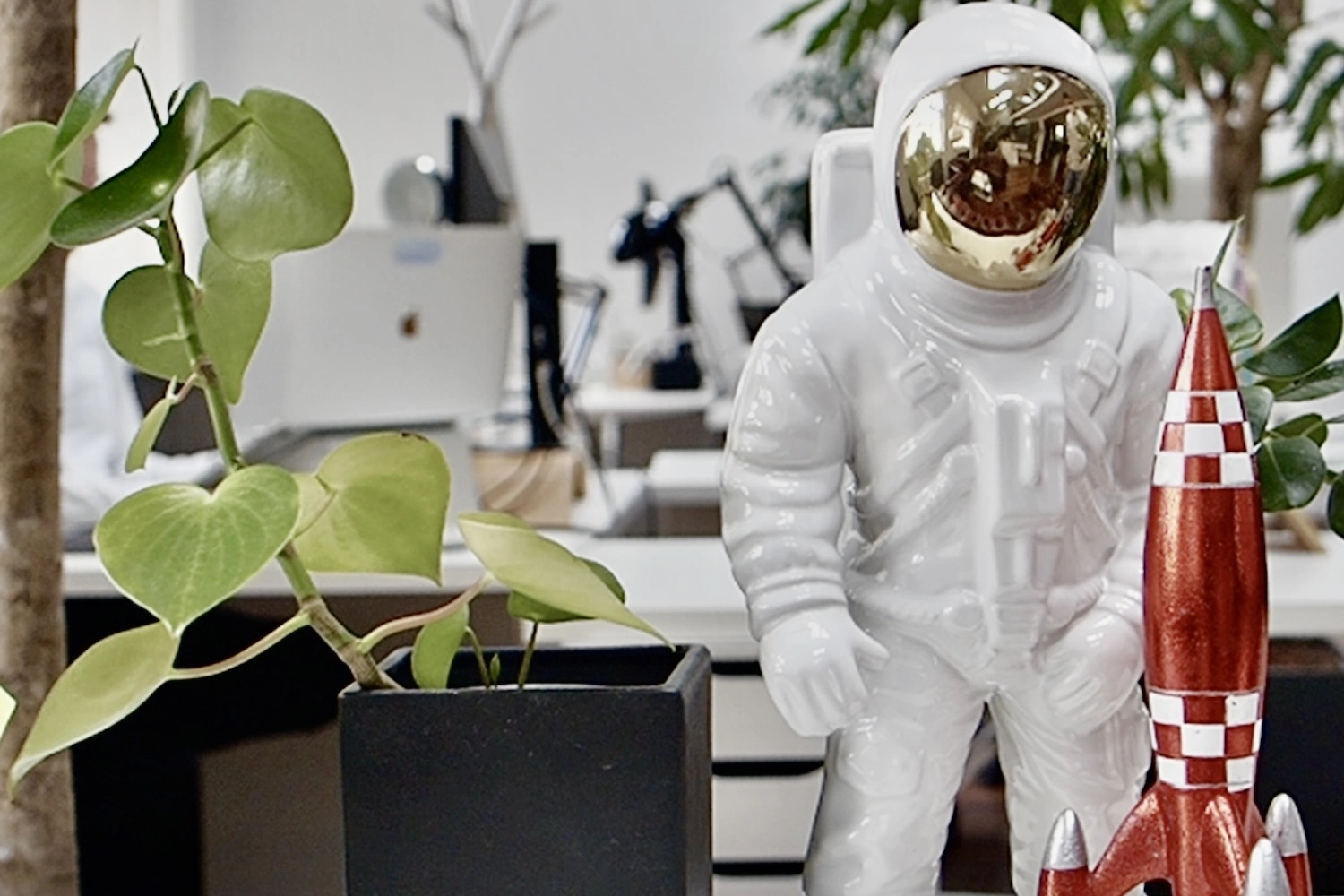
With AI continuing to advance at a rapid pace, innovation in 2027 will be shaped less by which individual technology delivers the next major breakthrough. What will matter more is how a blend of different technologies converges, and how quickly companies can turn this convergence into tangible products, services, and new business models.
The common denominator remains, almost inevitably, the prominent role that AI plays within this constellation. At the same time, robotics, new energy and storage technologies, biotechnology, and digital infrastructure are gaining further importance. For companies, this shifts the key question away from “Which technology should we be watching?” toward “Which of these developments is actually transforming our business?”
The following seven innovation trends are likely to be particularly relevant in 2027.
1. AI Evolves from Assistant to Autonomous Actor
The first wave of generative AI was primarily about making it easier to create text, images, software code, and other types of content. The next stage of development is now being propelled by a multiplication of capabilities: AI systems are increasingly taking on entire chains of tasks and organizing themselves largely autonomously in a proto-social manner.
So-called agentic systems, for example, can gather information, prepare decisions, operate different software applications, and execute multi-step processes, provided they have the necessary permissions. For companies, the potential therefore extends beyond simply increasing the productivity of individual employees. Entire workflows could be redesigned. Naturally, this also entails a new role for humans in this context: the extensively empowered creator is increasingly evolving into an orchestrator who directs and oversees AI systems.
By 2027, the key question is therefore unlikely to be whether companies use AI, but rather how much operational responsibility they are willing to delegate to AI systems. This will also bring an increasingly important question to the fore: what control mechanisms will be needed to govern them?
2. Physical AI Brings AI into the Real World
In parallel with this development, AI is increasingly moving beyond the screen and expanding into the physical world. Advances in robotics, sensor technology, and machine learning are enabling systems that can perceive their physical environment and respond to it.
This development is particularly relevant in manufacturing, logistics, agriculture, and healthcare. Robots could become more flexible in handling changing tasks rather than being programmed exclusively for a single, precisely defined operation.
This marks the beginning of a new phase of innovation: following the automation of information work, the automation of physical work is moving into sharper focus along with the question of how technological systems perceive and interact with the world around them.
3. Companies Build Their Own AI Infrastructure
As AI becomes increasingly widespread, the importance of the infrastructure underpinning its rise is growing as well. Computing power, chips, data centers, networks, and energy supply are becoming strategic resources. The global chip crisis and ongoing hardware bottlenecks can make investments in proprietary on-premise solutions appear risky, yet they may ultimately prove worthwhile.
Companies will therefore need to assess more carefully which AI applications should run on large cloud-based models and which can be operated locally or using smaller, specialized models. Ultimately, this is about shaping corporate strategy accordingly: not every market participant needs to take advantage of every available opportunity to the same extent. Instead, the key is to identify the right niche in which AI can create a meaningful, value-adding competitive advantage.
4. Energy Becomes a Key Innovation Area for the Digital Economy
The growing demand for computing power is making energy a central factor in technological development. As a result, innovations in power generation, electricity grids, energy management, and storage are moving increasingly into focus. Expanding power grids will play just as important a role as developing new forms of energy generation and effective storage solutions.
Battery technologies continue to advance, while companies are simultaneously exploring new ways to manage their energy consumption more flexibly and according to their specific needs. Research into longer-term technologies is also part of the picture. However, major breakthroughs in this field are not expected in 2027.
For the digital economy, this represents a remarkable shift: the true pace of the next phase of technological development will depend not only on more sophisticated algorithms and chips, but will increasingly be constrained by how quickly the additional energy required to power them can be made available.
5. Biology Becomes Increasingly Programmable
Biotechnology is also benefiting from advances in AI and automation. AI models can, for example, analyze protein structures, design new molecules, or identify promising drug candidates more quickly. This means that parts of the drug development process can increasingly be supported digitally before candidates are tested in the laboratory.
At the same time, tools for the targeted modification of biological systems are becoming increasingly powerful. One prominent example is CRISPR/Cas, which can be used to selectively modify specific sections of the genome. Further developments such as base editing and prime editing promise even more precise interventions. In synthetic biology, meanwhile, cells and microorganisms are deliberately engineered to perform specific tasks – for example, producing enzymes, chemicals, medicines, or alternative materials.
Laboratories themselves are also becoming increasingly automated. Robotic laboratory systems and so-called self-driving labs can conduct experiments automatically, analyze the results, and use them to plan subsequent experiments. Combined with AI, this could create an increasingly closed loop of digital design, experimentation, and optimization.
The implications extend far beyond the pharmaceutical industry. In agriculture, gene editing and biotechnology can, for example, help make crops more resilient to environmental factors such as disease, heat, or drought. In food production, precision fermentation and cultured cells enable new methods for producing proteins and other ingredients. And in industry, microorganisms can serve as biological production platforms for chemicals or new materials.
Biology is thus increasingly evolving from a science of observation into one concerned with deliberate design.
6. Spatial Computing Finds Its Way into Everyday Life
The boundary between the digital and physical worlds will continue to become increasingly fluid. Augmented reality, virtual reality, and spatial computing will evolve from isolated applications into new user interfaces that call for entirely new paradigms of interaction.
The key advances are likely to lie less in spectacular virtual worlds than in practical applications: technicians can access digital information directly while working on a machine, designers can collaborate on three-dimensional models, and employees can receive visual training for complex processes. As these experiences become increasingly seamless, they are also becoming more accessible and relevant to a broader audience.
Whether the necessary devices will achieve mass-market adoption as early as 2027 remains an open question. In specialized professional applications, however, spatial computing could establish itself as an integral part of everyday workflows.
7. Trust Becomes an Innovation in Its Own Right
The more powerful digital systems become, the more important the question of whether people can trust them becomes. Cybersecurity, data protection, provenance tracking for digital content, and oversight of automated decisions are therefore increasingly becoming integral parts of product design itself. AI governance is an essential component for any organization seeking to keep pace with technological change.
Particularly when it comes to AI, simply deploying the most powerful model available will not be enough in the long term. Companies need to understand how and which data is being used, what actions a system is permitted to perform, and when human oversight is required.
Regulation is often regarded as an obstacle to innovation. In 2027, however, it may become increasingly apparent that reliable rules and technical safeguards can also provide a competitive advantage: trust makes it easier to adopt and implement new technologies.
Conclusion: From Individual Technologies to Innovation Networks
Perhaps the most important innovation trend of 2027 is therefore not a single product.
AI requires chips. Chips require data centers. Data centers require energy. Robots combine AI with sensors and new hardware platforms. Biotechnology, in turn, uses AI and automated laboratories to accelerate research.
Innovation is therefore increasingly emerging at the intersections where different elements of these networks converge.
For companies, this has an important consequence: it is not enough to observe individual trends in isolation. What matters instead is understanding which combinations have the potential to transform their industry in a lasting way.
The winners of 2027 may therefore not be those who are quickest to experiment with every new technology. Instead, the most successful organizations will be those that recognize early on where technological progress can generate tangible economic or societal value and then consistently turn that potential into reality.
Further Reading
World Economic Forum – Top 10 Emerging Technologies of 2026
WEF – Top 10 Emerging Technologies of 2026
Gartner – Top Strategic Technology Trends for 2026
Gartner – Top Strategic Technology Trends for 2026
International Energy Agency – Energy and AI
IEA – Energy and AI
NVIDIA – Physical AI & World Models / Cosmos 3
NVIDIA – Physical AI and Cosmos 3
PubMed – CRISPR-Cas9 DNA Base-Editing and Prime-Editing
PubMed – CRISPR, Base Editing and Prime Editing
World Economic Forum – Precision Fermentation
WEF – Precision Fermentation und weitere Emerging Technologies
Apple – Spatial Computing in Unternehmen
Apple – Spatial Computing in Business
NIST – AI Risk Management Framework: Generative AI Profile
NIST – Generative AI Risk Management Framework
Europäische Kommission – European Approach to Artificial Intelligence / AI Act
European Commission – European Approach to AI
Europäische Kommission – Transparenzpflichten des AI Act
European Commission – AI Act Transparency Guidelines
About the author
As a communications expert, Jonas is responsible for the linguistic representation of the Taikonauten, as well as for crafting all R&D-related content with an anticipated public impact. After some time in the academic research landscape, he has set out to broaden his horizons as much as his vocabulary even further.
